Wi-Fi Deployment


Dead zones on a warehouse floor mean stalled inventory scanners and delayed shipments. Choppy connections in a conference room turn executive video calls into an operational embarrassment. When a commercial wireless network underperforms, it does not just annoy your staff. It directly caps your daily operational throughput.
Most business owners treat wireless connectivity as a simple hardware numbers game, assuming that throwing more access points at a building will naturally eliminate drops. Traditional low-voltage installers often fuel this misconception, mounting hardware wherever it is easiest to punch a hole or pull a wire. This careless approach leaves your facility plagued by signal self-interference, hidden coverage gaps, and constant device disconnects. YesTechie approaches corporate airspace as a core engineering discipline. We calculate your exact physical and spectral constraints to build an optimized, high-density wireless canopy that ensures fluid device roaming and zero dropped packets under your heaviest operational peaks.
The YesTechie Wireless Standard: Carrier-Grade Airspace Engineering
Our team brings Internet Service Provider-level diagnostic expertise to indoor and outdoor wireless deployments. We map out physical and spectral constraints before a single bracket is mounted, ensuring your corporate airspace is optimized for performance, capacity, and security. We treat your airspace as a finite, high-density data pipeline. By isolating high-bandwidth corporate assets and eliminating channel interference at the source, we balance raw wireless performance with absolute data security.

What the Service Entails: Step-by-Step Wireless Infrastructure Breakdown
Deploying a commercial wireless network is a highly structured, data-driven process that converts physical layout realities into a predictable, high-throughput coverage canopy. We build your wireless footprint to support high concurrent client counts natively, ensuring your system conforms to strict data security frameworks without creating operational friction for your daily workflows.
1. Advanced RF Site Surveys and Compliance Mapping
We begin by conducting comprehensive passive and active radio frequency site surveys across your facility using professional spectrum analysis tools. Our engineers benchmark environmental noise floors, identify rogue broadcast sources, and isolate physical signal barriers. If your operations must conform to industry regulations, we integrate your specific compliance obligations, including CMMC DoD, HIPAA, PCI-DSS, or SOC2, directly into the initial wireless design. This rigorous frontend analysis ensures your network natively protects over-the-air data transit and satisfies strict third-party data audits without requiring expensive physical hardware modifications later.
2. Predictive Modeling and Capacity Engineering
This phase establishes the definitive physical blueprint for your wireless hardware deployment. We explicitly avoid generic coverage calculations by auditing your actual operational density.
- RF Heat-Mapping and Simulation: We simulate exact access point coordinates and antenna patterns directly over your digital facility blueprints using advanced RF predictive software.
- Material Attenuation Analysis: Wireless signals propagate differently through concrete, heavy drywall, structural steel, and industrial warehouse racking. We calculate exact signal drop-offs based on your real-world structural density rather than generic distance approximations.
- High-Density Load Balancing: We match hardware placement to the exact volume of concurrent users and specific throughput demands of your local business applications. We configure active band steering to guarantee seamless client roaming, meaning your staff can walk from the loading dock to the front office without experiencing a single broken session.
3. High-Wattage Path Architecture and Physical Cabling
A wireless network is only as stable as the physical cable plant supporting it. A specialized cabling technician performs a secondary site walkthrough to build a resilient backbone.
- Strategic Pathway Mapping: We design dedicated horizontal data runs and map structural pathways back to your central server room, keeping physical infrastructure neat and secure.
- Impedance and Distance Calculation: We calculate exact distance parameters and line impedance variables to deploy the optimal grade of shielded copper cabling for your specific commercial environment.
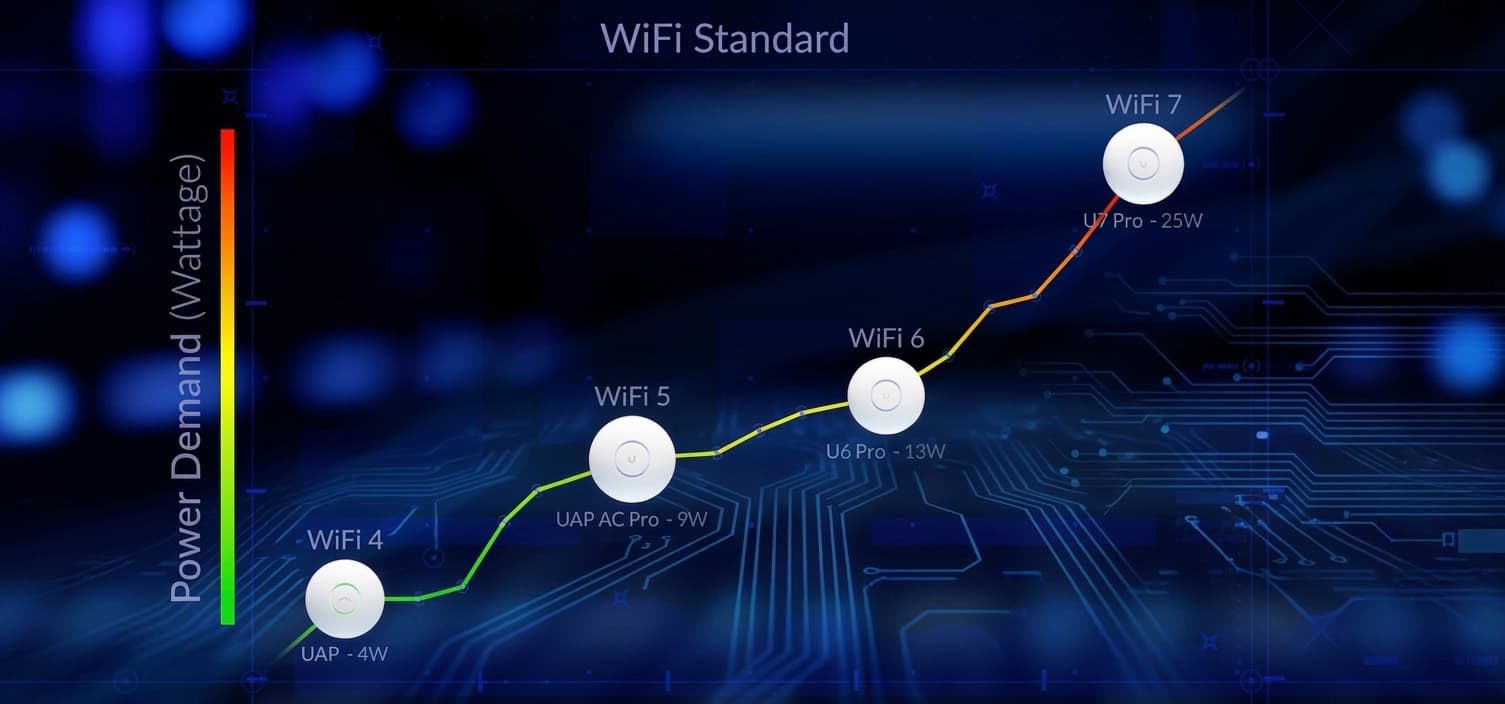
- PoE++ Power Delivery: This structured cable backbone is engineered to deliver high-wattage Power over Ethernet overhead. We ensure your advanced Wi-Fi 7 access points receive continuous, clean power and multi-gigabit data backhaul connectivity without signal degradation.
4. Hardware Hardening and Enterprise Security Deployment
Our engineers manage the physical installation from end to end, deploying high-performance hardware tailored to your specific technical requirements.
- Precision Hardware Mounting: Enterprise-grade switches and wireless access points are secured to structural columns, high warehouse ceilings, or outdoor facades using commercial mounting fixtures built to withstand harsh environments.
- Zero-Trust Wireless Isolation: We enforce absolute data boundaries directly over the air. Your high-bandwidth corporate assets, wireless inventory tools, IoT building sensors, and public guest portals are confined to strict, isolated VLANs. A compromised guest device can never interact with internal financial records.
- Over-the-Air Security Frameworks: We activate modern wireless security protocols, including WPA3-Enterprise encryption and 802.1X RADIUS authentication, to protect all data in transit.
- Device Hardening Protocols: We change factory security certificates, disable insecure legacy management channels, and encrypt local configuration files before the system is activated.
5. Validation Testing, Throughput Auditing, and Handover
Before your wireless network goes live, we subject the entire coverage canopy to rigorous validation testing under simulated operational loads. We conduct physical walkthrough audits with live client hardware to measure actual throughput, latency, jitter, and packet loss metrics across every square foot of your footprint.
Handover includes a comprehensive Wireless Infrastructure Documentation Packet designed to satisfy corporate security audits and operational planning needs. We deliver full as-built RF heat maps, logical network topology blueprints, verified configuration backups, and active port registries. Additionally, we provide clear training sessions and basic operational runbooks, ensuring your team can easily oversee daily guest access parameters and monitor overall environmental health.
Our Approach: Vetted Enterprise Solutions Without the Overhead
We evaluate every commercial wireless project on a case-by-case basis. We analyze your digital workflows, physical structural blueprints, and long-term scaling targets to map out a coverage architecture tailored specifically to your business.
Historically, legacy IT companies argued that license-free hardware environments lacked the roaming stability and deep spectrum inspection required for enterprise-grade Wi-Fi. Massive hardware and software developments have fundamentally rewritten the wireless landscape. Having engineered hundreds of successful commercial infrastructure deployments across the United States, our firsthand experience confirms that the latest generation of Ubiquiti wireless solutions natively covers 90 percent of all commercial enterprise network requirements.


Unless you are deploying Wi-Fi for highly specialized critical nodes with extreme government isolation mandates, paying for restrictive subscription-based wireless platforms is an unnecessary drain on corporate capital. By deploying modern UniFi access points and dedicated controllers, we deliver advanced multi-gigabit throughput, seamless client roaming, and highly secure digital environments at a fraction of the traditional cost.
The Enterprise Value: Breaking the Subscription Loop
Traditional enterprise networking systems force businesses into a continuous cycle of operational expenses. Legacy Wi-Fi vendors typically require you to pay ongoing software licensing fees and recurring per-access-point subscriptions just to keep your wireless infrastructure broadcasting.
The UniFi ecosystem completely breaks this model:
- Zero Recurring Licensing Fees: You purchase the physical access points, and your business owns the operating software permanently. There are no monthly platform subscriptions, no hidden maintenance fees, and no artificial network shut-offs if a vendor contract expires.
- Radically Reduced Total Cost of Ownership: By eliminating recurring vendor fees and mandatory subscription extensions, your organization secures massive long-term financial savings on both initial wireless deployment and ongoing infrastructure maintenance.
Simplified Management for Non-IT Operations
If your primary business operations do not center around technology, you likely do not want to employ a dedicated network engineer just to manage daily Wi-Fi passwords, adjust access levels, or review client connection logs.
The UniFi platform shifts highly complex corporate network management away from archaic terminal entries into an accessible, visually driven web GUI and mobile interface. A manager or local administrator can easily oversee multi-site wireless networks, generate temporary guest portal vouchers, isolate unusual device traffic, or provision secure user profiles from a smartphone or browser in minutes. This completely bypasses convoluted programming scripts.
Next-Generation Automated Wireless Capabilities
Ubiquiti packs sophisticated, automated threat management and enterprise-grade radio frequency tools into an intuitive software layout. This gives commercial facilities access to optimization features that are often overly complicated on legacy platforms:
- Multi-Link Operation (MLO) Technology: Utilizing the latest Wi-Fi 7 standards, the system allows client devices to send and receive data across multiple frequency bands simultaneously, ensuring ultra-low latency and true multi-gigabit real-world speeds.
- Automated AI Wi-Fi Doctor: This native software optimization tool actively protects your wireless environment. It continuously monitors airtime congestion and automatically adjusts wireless channel distribution and access point transmit power behind the scenes. This ensures clean client roaming without requiring manual engineering interventions.
- Deep Packet Inspection (DPI) and App Filtering: The native gateway engines handle continuous cryptographic traffic analysis directly over the Wi-Fi network. This allows administrators to identify, throttle, or block specific applications like streaming services or social media on the corporate wireless network while prioritizing critical business VoIP calls.
- Centralized Multi-Site Wireless Architecture: For businesses operating across distributed corporate offices or separate logistics hubs, we leverage next-generation hardware to deploy a unified wireless fabric. Your offices in different cities securely synchronize wireless SSIDs, access policies, and security profiles from a single interface without any ongoing software licensing fees.
The Truth About the Enterprise Market: Exposing the Legacy MSP Model
To understand why some traditional Managed Service Providers (MSPs) and legacy network administrators speak negatively about license-free wireless infrastructure, you must examine the economics of the IT industry. For over thirty years, traditional enterprise IT vendors have protected a closed sales ecosystem. Under this paradigm, a business owner cannot simply purchase corporate-grade access points directly. Organizations are forced to buy through a certified MSP partner.
This model is designed to reward middlemen rather than optimize business efficiency. Traditional MSPs secure up to a 40 percent recurring commission on every software license, Wi-Fi controller subscription, and mandatory maintenance contract they sell you. When a disruptive hardware vendor bypasses this model and passes control directly to the end-user, it threatens the primary revenue stream of the MSP. The aggressive push for subscription-heavy wireless hardware is often driven by financial interest rather than engineering superiority. YesTechie rejects this rent-seeking philosophy. We believe your wireless airspace belongs to you, and you should never pay a recurring tax just to keep your access points active.
Hyperscale Wireless Hardware Sourcing
We install the highest-tier commercial wireless hardware lines from Ubiquiti. These devices are engineered specifically to handle immense client density, heavy data loads, and challenging physical environments without causing network bottlenecks:
- Flagship Wi-Fi 7 Enterprise Access Points: For high-capacity indoor environments, we deploy the E7 Audience and U7 Pro Max access points. Utilizing 10 to 12 spatial streams, dedicated 6 GHz radios, and integrated spectral scanning engines, these units deliver interference-free, multi-gigabit over-the-air throughput to support hundreds of concurrent devices flawlessly.
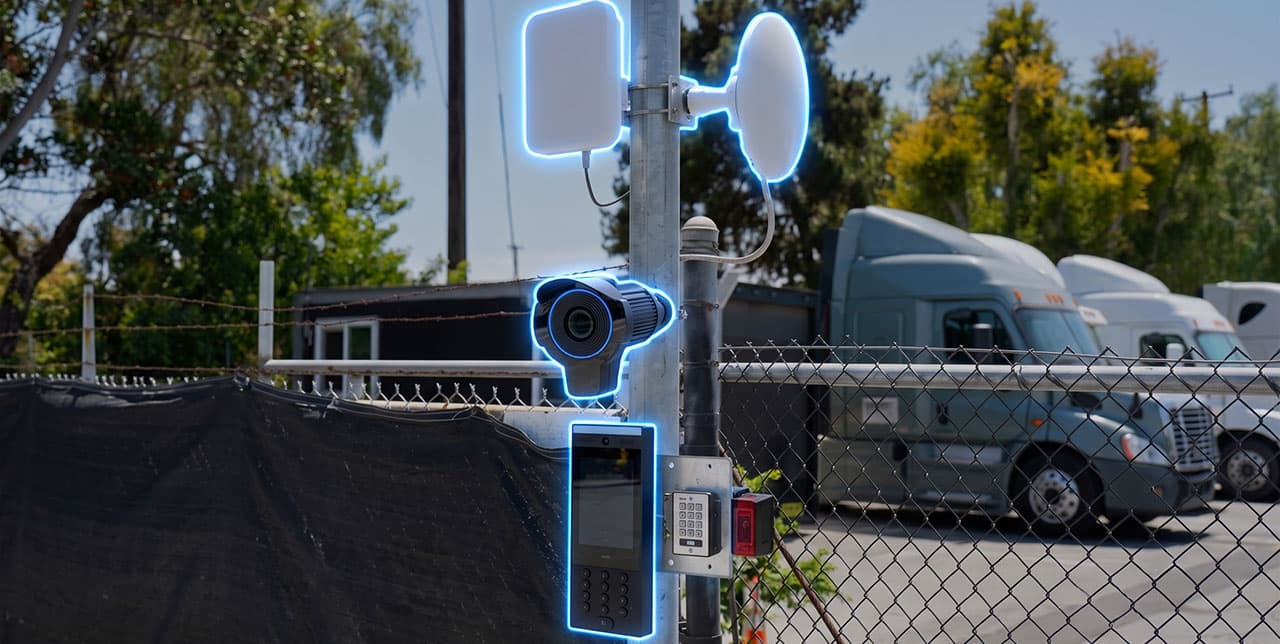
- High-Density and Extreme Venue Infrastructure: We secure outdoor patios, warehouse yards, and harsh industrial spaces utilizing ruggedized U7 Outdoor units featuring directional super antennas. For stadiums, massive auditoriums, or environments with extreme device congestion, we deploy the WiFi BaseStation XG. This tri-radio unit is built to cut through massive RF noise and support thousands of simultaneous client connections.
- 60GHz Multi-Gigabit Building Bridges: Connecting separate buildings traditionally required expensive fiber-optic trenching. We bypass destructive construction by engineering 60GHz wireless bridges. Utilizing advanced Wave MLO6 technology and UniFi Building Bridge XG units with 10G SFP+ uplinks, we establish multi-gigabit, zero-latency invisible fiber links between your corporate offices, parking structures, and remote logistics warehouses spanning distances up to 3 miles.


Bridging the Support Gap: The YesTechie Integrator Advantage
When a disruptive technology platform like Ubiquiti eliminates recurring vendor fees, it also changes how technical support is delivered. Legacy brands bundle expensive factory help desks into your mandatory software licenses. Ubiquiti builds incredible wireless hardware and secure software, but the vendor does not provide direct on-site deployment, custom predictive heat-mapping, or urgent interference troubleshooting for your daily business operations. The responsibility of calculating PoE++ wattage budgets, aligning 60GHz wireless bridging antennas, and custom-hardening your Wi-Fi falls entirely on the integrator.
YesTechie fills this exact operational gap with complete contractual flexibility. As a licensed C-7 low-voltage contractor and certified integration partner, we provide the expert engineering layer required to install and maintain your wireless infrastructure flawlessly. We do not lock you into proprietary monitoring contracts or forced monthly software taxes. Instead, we adapt our support layer entirely to your operational reality:
- Self-Managed with On-Demand Support: If your business has internal staff capable of overseeing daily tasks via the visual GUI dashboard, you do not need a monthly contract. You run the system yourself. You only pay YesTechie for on-demand hourly service dispatches, expansion projects, or technical consulting when an unexpected wireless challenge arises.
- Dedicated SLA Monthly Plans: For commercial operations that require guaranteed uptime, continuous spectrum monitoring, and rapid hardware replacement, we offer flexible monthly service plans. If a critical access point or bridging antenna experiences an unexpected hardware failure, our Service Level Agreement guarantees that we will deploy an identical replacement node directly from our local Los Angeles inventory, keeping your facility online without traditional vendor delays.
Proven Footprint Across Demanding Industries
Commercial wireless engineering is never a one-size-fits-all deployment. YesTechie has engineered, isolated, and protected robust digital airspaces across a diverse range of specialized business sectors.
1. Hyperscale Wi-Fi 7 Logistics Hub Deployment
- Problem: A massive 700,000-square-foot active logistics hub in Ohio required uncompromised wireless stability for a fleet of mobile barcode scanners. The facility operated continuously, meaning the deployment faced a strict 20-day deadline and could not disrupt 24/7 forklift traffic or supply chain fulfillment workflows.
- Solution: We engineered a dedicated fiber-optic backbone linking four IDF nodes to high-capacity USW Pro Max switches. To bypass active floor traffic safely, we deployed aerial drones to fish CAT6A cables across high-clearance roof trusses. The canopy utilizes enterprise U7 Pro XG Wi-Fi 7 access points driven by dedicated 2.5 GbE uplinks to prevent local bandwidth bottlenecks.
- Result: The entire hyperscale network was certified and operational within the strict 20-day window. Floor staff now maintain flawless barcode scanning across nearly a million square feet, while the license-free UniFi architecture delivers enterprise stability without recurring software fees.
2. Scalable Multi-Floor Corporate Office Architecture
- Problem: BuildOps, an enterprise SaaS company in Los Angeles, needed to scale their network infrastructure as their on-site team rapidly expanded from 50 to nearly 200 employees across two separate floors. Their engineering teams required massive bandwidth for cloud code syncing and continuous video conferencing without facing wireless capacity bottlenecks.
- Solution: We executed a zero-downtime multi-floor expansion. We cascaded enterprise PoE switches between distribution frames and upgraded their initial wireless infrastructure to a high-density matrix of seven UniFi E7 Enterprise Wi-Fi 7 access points. This bridged the floors into a single, cohesive local site managed via a central dashboard.
- Result: The corporate office now effortlessly sustains hundreds of active client devices simultaneously. Employees enjoy seamless roaming between floors, frictionless authentication, and flawless video call performance without any recurring software licensing fees.

3. High-Density Commercial Event Venue
- Problem: BlueGround Studios transformed an empty Los Angeles industrial warehouse into a premium rental facility for music festivals and film crews. They needed a plug-and-play wireless network capable of supporting thousands of simultaneous connections, including point-of-sale (POS) terminals and production teams, without experiencing latency spikes.
- Solution: We built a 25-Gbps-ready fiber backbone powering high-capacity USW-Pro-XG-24-PoE switches. From this 10 Gbps access layer, we deployed UniFi E7 Campus Enterprise access points high along the steel ceiling beams of the sound stages. We engineered strict network segmentation, creating isolated VLANs for transactional data, VFX production crews, and general guests.
- Result: During the Reframe music festival, the network sustained extreme user density with zero packet drops. POS terminals executed transactions instantly on isolated subnets, proving the venue's capability to deliver flawless wireless performance under severe commercial stress.
4. Enterprise Food Production Plant Upgrade
- Problem: California Custom Fruits & Flavors (CCFF) operated expansive manufacturing facilities burdened by inconsistent Wi-Fi coverage, particularly in -20°C cold storage zones. This legacy infrastructure caused unacceptable latency (bottlenecked by a sub-1 Gbps backbone) and hampered real-time, FDA-compliant inventory scanning.
- Solution: We overhauled the network backbone with Enterprise Campus Layer 3 switching and deployed a high-density matrix of 31 UniFi E7 and E7 Campus Wi-Fi 7 access points. The IP67-rated E7 Campus units were specifically heat-mapped and deployed to withstand -40°C environments in the freezers without suffering signal attenuation.
- Result: CCFF achieved 100 percent flawless Wi-Fi coverage across their most demanding industrial zones, enabling real-time IoT and scanner telemetry with sub-50ms latency. The license-free UniFi management model eliminated recurring vendor fees, radically reducing their Total Cost of Ownership while maintaining strict food safety compliance.
A commercial wireless infrastructure is an evolving foundation for your business operations. We build your RF topology to easily scale alongside your device density and operational growth. To ensure your access points, wireless bridges, and guest networks remain completely secure and efficient long after the initial deployment, we back our physical installations with dedicated technical support. Explore our Managed IT Services to learn more about our proactive maintenance plans, continuous spectrum monitoring, and automated firmware management.
If you are moving into a new commercial facility, resolving dead zones on an existing wireless network, or planning a multi-site Wi-Fi expansion, contact YesTechie today to schedule a comprehensive physical layout assessment and RF spectrum audit.
Nationwide B2B Deployment & Enterprise Integration
While our engineering headquarters operates out of Los Angeles, the YesTechie integration team deploys hyperscale wireless infrastructure for commercial enterprises across the United States. We partner exclusively with organizations where high-density client roaming, strict data security, and seamless Wi-Fi connectivity are the critical foundations of daily operations.
Our wireless deployments span massive industrial logistics warehouses, multi-state corporate headquarters, and high-throughput production studios. We do not operate as simple Wi-Fi installers. We architect converged, high-availability radio frequency canopies designed to eliminate dead zones and withstand extreme client congestion, ensuring your workforce remains permanently connected without restrictive SaaS licensing contracts.
FAQ
Do we have to pay monthly software licensing fees for our access points to keep working?
No. If we deploy a UniFi wireless infrastructure for your facility, you purchase the physical access points once and own the management platform permanently. All roaming features, guest portal configurations, and firmware updates are completely free and update automatically without recurring subscription fees.
How do we connect a secondary building to our main network without trenching underground cables?
We utilize advanced 60GHz wireless bridging technology. By mounting specialized Point-to-Point (PtP) Wave or Building Bridge antennas on the exterior of your buildings, we can beam a highly focused, multi-gigabit wireless signal across your property. This acts exactly like an invisible fiber-optic cable, connecting the remote building to your main network at a fraction of the cost of physical trenching.
Will my staff need specialized IT training to manage daily guest Wi-Fi access?
Not at all. We configure intuitive web and mobile management interfaces. Your administrative team can easily generate secure, time-restricted guest Wi-Fi passwords, print QR codes for visitors, or monitor overall network health directly from their smartphones without needing an engineering background.
What happens if a single Wi-Fi access point goes offline?
We design our commercial wireless environments with strategic coverage overlap. If an individual access point experiences a hardware failure, the system automatically detects the drop and seamlessly shifts local client devices to the nearest functioning access points. This self-healing architecture maintains active network sessions and keeps your business operational while our engineers dispatch a replacement unit.
Can you integrate the new wireless network with our existing ISP and wired hardware?
Yes. We operate as a vendor-agnostic integrator during the initial design phase. We will seamlessly connect your new wireless access points and dedicated controllers directly into your existing structured cabling and ISP gateway, provided your current infrastructure meets modern power and security standards.
Will this infrastructure stop our warehouse barcode scanners from dropping connections?
Absolutely. Dropped scanner sessions usually occur due to poor client roaming and physical signal blocking from metal racks. We engineer precise active band steering and map exact signal attenuation through your inventory. This ensures that as a forklift driver moves between aisles, their scanner seamlessly hands off to the nearest access point without breaking the active server session.
Can our existing network cabling support the new Wi-Fi 7 access points?
We perform a complete physical layer audit before deployment. Modern Wi-Fi 7 access points demand massive data throughput and require high-wattage PoE++ power delivery. If your facility currently runs on outdated Cat5e wiring, we will upgrade the necessary horizontal runs to premium shielded Cat6A cabling, ensuring your new wireless canopy is never bottlenecked by old physical wires.
Can we force guests to accept our Terms of Service before they access the internet?
Yes. We deploy highly customizable Captive Portals for your guest networks. When a visitor connects, they are immediately redirected to a branded landing page where they must agree to your legal Terms of Service or enter a temporary voucher code. This process keeps your business compliant and legally protected while keeping guest traffic strictly isolated from corporate data.
How do you prevent neighboring businesses from interfering with our Wi-Fi signal?
We utilize access points equipped with dedicated spectral scanning engines. During deployment, we audit the local airspace to identify neighboring routers and rogue broadcast sources. We then lock your network to isolated, uncongested channels. Furthermore, the automated AI Wi-Fi Doctor continuously monitors the airspace and dynamically shifts channels behind the scenes to avoid sudden interference.
Can the network handle a crowded conference room where 50 people connect simultaneously?
Yes. For extreme high-density zones like executive boardrooms, auditoriums, or cafeterias, we deploy specialized Enterprise access points utilizing advanced spatial streams and Multi-Link Operation (MLO). This hardware is specifically engineered to cut through heavy RF noise and support hundreds of simultaneous client connections in a confined space without causing latency spikes or video call buffering.