EV Charging & Unified Management

Deploying electric vehicle charging stations across a commercial property, logistics warehouse, or corporate campus is no longer a luxury amenity. It is a critical operational requirement. However, adding high-wattage Level 2 chargers to your property presents immediate technical friction. Unmanaged vehicle charging can easily overwhelm your local electrical grid, spike peak-demand utility charges, and introduce significant cybersecurity vulnerabilities if left unsegmented.
YesTechie provides end-to-end engineering, low-voltage integration, and infrastructure optimization for commercial EV charging networks. As a licensed California C-7 low-voltage contractor (License #1125084), we bridge the gap between heavy electrical power delivery and enterprise network architecture. We ensure your charging infrastructure is structurally compliant, electronically secure, and engineered to scale alongside your fleet or tenant demands.
The Engineering Standard: Carrier-Grade Power Foundations
We treat commercial EV charging stations as high-density, network-dependent endpoints traversing your building backbone. Before a single conduit is routed or a pedestal is anchored, our engineers calculate localized power constraints, map available circuit capacities, and evaluate your property topology.
We isolate high-wattage infrastructure, establish strict network segmentation, and eliminate performance bottlenecks at the physical and logical layers. Because we assess property deployment through an objective lens, we match the hardware stack directly to your commercial requirements, balancing rapid charging speeds with intelligent energy conservation.

Step-by-Step Infrastructure Breakdown
Commercial EV charging deployment is a highly structured, engineering-driven process that converts business operational needs into a stable, documented layout. Unlike basic residential plug-in chargers, commercial systems must manage multi-station load distribution, protect internal networks from public access points, and maintain absolute physical reliability under continuous heavy use.
1. Discovery and Electrical Needs Assessment
We begin by evaluating your property electrical panels, benchmarking active power utilization, and auditing operational scaling goals. For facilities deploying employee or public charging, we map out compliance obligations, ADA accessibility rules, and municipal parking standards directly into the initial design phase. We evaluate user density and audit the specific electrical constraints of your facility, ensuring the charging infrastructure is engineered for your property's unique capabilities rather than a theoretical benchmark.
2. Strategic Structural and Cable Plant Design
This phase establishes the technical blueprint of your facility to prevent costly deployment errors and maximize physical hardware efficiency.
- Logical Power Topology: We define the electrical feeder, sub-panel distribution, and network-attached endpoint layers, utilizing a collapsed distribution layout optimized for maximum data and power efficiency.
- Physical Conduit and Cable Routing: We plan and map structural trenching and conduit pathways to optimize power transit and eliminate signal interference. We select the most efficient grade of heavily insulated copper conductor for high-amperage horizontal runs, alongside specialized category data cabling.
- Dynamic Load Management Design: We engineer smart load-balancing strategies across your charging lines. By establishing automated power distribution rules, we ensure that available facility amperage is shared efficiently among active stations, dynamically adjusting output to protect your primary building operations from tripping main breakers.
3. Expert Network Planning and Traffic Edge Design
Modern EV charging arrays are heavily dependent on immediate data connectivity for payment authorization and access control. Poor planning here is the primary cause of connection drops and authorization failures.
- RF and Ethernet Site Surveys: We map local Wi-Fi signal propagation and verify wired data pathways across your parking structures.
- Advanced Firewall and Isolation: We isolate corporate data networks from public-facing charging stations into separate virtual networks (VLANs), ensuring that your internal company assets remain immune to external physical network intrusions through open charging ports.
- Traffic Engineering and QoS: We deploy strict Quality of Service configurations to guarantee that time-sensitive charging commands and payment processing always receive absolute network priority.
4. Sourcing, Physical Installation, and Deployment
We manage the physical deployment phase end to end. We run, organize, and terminate all heavy-gauge power wiring and category data lines strictly adhering to commercial installation best practices for neatness, structural grounding, and safety. All charging enclosures, pedestal stands, and infrastructure gateways are securely mounted, cross-connected, and thoroughly tested using advanced link and voltage validation equipment before system activation.
5. Validation, Safety Testing, and Handover
Before the charging network goes live, we conduct rigorous verification testing to validate throughput, responsiveness, load-allocation logic, and hardware grounding metrics. We perform active load-simulation tests to confirm your energy management mechanisms respond dynamically under maximum utilization. Handover includes complete as-built documentation, electrical load calculations, and verified network zone maps.
Vetted Enterprise Solutions Without the Overhead
Historically, managing a multi-station vehicle charging footprint required complex, third-party middleware and subscription-heavy energy management software platforms. However, massive advancements have fundamentally rewritten the landscape.
The latest generation of UniFi Connect EV charging appliances natively covers 85% to 90% of all commercial enterprise electrical and access tracking requirements. Unless you are designing infrastructure for highly specialized municipal environments with extreme edge-case isolation mandates, paying for legacy, subscription-tied charging platforms is an unnecessary capital drain.

The Ubiquiti Advantage (UniFi EV Charging)
Driven by this market trajectory, we architect your distributed charging footprint, security gateways, and power management networks around the modern Ubiquiti UniFi Connect ecosystem.
- Zero Recurring Licensing Fees: Ubiquiti delivers uncompromising energy distribution and granular access routing with absolutely no ongoing software subscriptions. There are no hidden media player fees and no per-station activation charges.
- Absolute Data Sovereignty: Instead of routing your sensitive internal business traffic and vehicle telemetry through vulnerable third-party cloud controllers, the ecosystem processes data completely on-site. Your entire charging matrix configuration remains strictly under your sovereign physical control.
- Radically Reduced TCO: By completely eliminating recurring platform fees, your business secures massive long-term financial savings. Your infrastructure belongs to you, meaning you never pay an ongoing tax just to keep your physical charging ports active.
Next-Generation Automated Capabilities
Ubiquiti packs highly sophisticated, enterprise-grade energy management and access security features into an intuitive software layout:
- Dynamic Load Management Groups: When multiple vehicles plug in simultaneously, the native engine automatically redistributes power delivery among active stations based on your predefined maximum current threshold, completely preventing local grid overload.
- Flexible Access Control Matrix: Administrators can configure granular authentication rules using subscription-free tokens, one-tap mobile validation apps (UniFi Identity), or secure printed codes to restrict usage to verified tenants, employees, or retail guests.
- Automated Scheduling and Cost Automation: Program when and how your stations are accessed. Restrict charging to off-peak hours to minimize utility demand charges, adjust maximum output dynamically based on the time of day, and automate digital signage loops.
- Digital Signage Media Playback: On compatible touchscreen models, administrators can push custom videos, images, and brand advertisements directly to the station display, transforming a parking stall into a high-visibility marketing engine.
Hyperscale Hardware Sourcing & Installation Essentials
We install Ubiquiti's highest-tier commercial hardware lines, built and engineered specifically to handle immense interactive usage and continuous outdoor utility loads:
- UniFi EV Station Pro: Delivers up to 11 kW of continuous charging output over a 7-meter SAE J1772 cable, featuring a 10.1-inch interactive touchscreen, full digital signage playback, and an integrated 8 MP camera.
- UniFi EV Station Lite: A compact, outdoor-ready Level 2 station engineered for high-density corporate parking fields, delivering 11 kW charging output with a streamlined 1.7-inch status layout.
- Stainless Steel EV Station Stand: An industrial-grade, architectural mounting solution accommodating up to two independent EV stations simultaneously with complete interior cable routing paths.

Bridging the Support Gap: The YesTechie Integrator Advantage
When a disruptive technology platform like Ubiquiti eliminates recurring vendor fees, it also changes how technical support is delivered. Legacy brands bundle expensive, factory-managed support contracts into your mandatory software licenses. Ubiquiti builds the hardware, but the responsibility of calculating electrical panel capacities, structuring code-compliant conduit paths, and maintaining system health falls entirely on the integrator.
YesTechie fills this exact operational gap. You run the system yourself without forced monthly software taxes, and you only pay YesTechie for on-demand hourly service dispatches when an unexpected infrastructure challenge arises. For enterprise operations requiring guaranteed station uptime, we offer flexible SLA monthly plans ensuring rapid deployment of identical replacement nodes directly from our local Los Angeles inventory.
National Commercial EV Infrastructure Deployment
While our engineering headquarters is based in Los Angeles, YesTechie architects and deploys commercial EV charging infrastructure for enterprises across the United States. We partner with logistics operators, multi-tenant property managers, and corporate campuses that require robust, scalable energy delivery without the burden of legacy software subscriptions.
From executing complex electrical load calculations to pulling high-gauge copper and integrating secure VLAN access protocols, our certified field engineers deliver end-to-end physical execution. We transform standard parking facilities into intelligent, load-balanced power networks.
FAQ
What core infrastructure is required to deploy a UniFi EV charging station network?
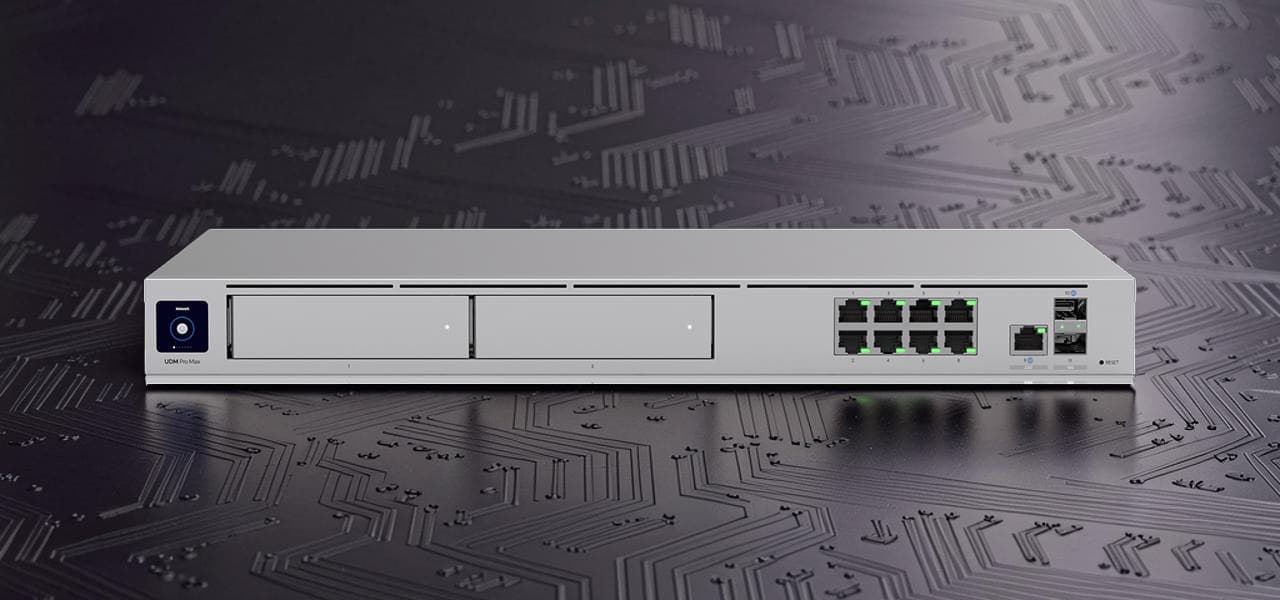
In addition to your EV Stations, you will need a compatible UniFi Console. We recommend a UniFi Cloud Gateway (like the Dream Machine Pro or Special Edition) to leverage the built-in firewall. A hard disk drive (HDD) is required to store media content for digital signage applications. EV Stations support wired Ethernet connections and can also wirelessly connect to an existing UniFi Wi-Fi network.
What authentication options are available to secure commercial charging access?
Admins have several options: QR Codes generated in UniFi Connect, onboarding users to UniFi Identity for single-tap mobile app unlocking, or using NFC Cards (which requires a UniFi Access Control Hub and Reader). All charging activities are securely logged and reviewable.
Can we automate when our EV stations are accessible to manage power costs?
Yes. You can allow access only during specific times to support off-peak charging, adjust maximum charging output based on the time of day to manage electricity costs, or schedule digital signage loops to align with advertising objectives.
Can the EV charging system continue to operate if it loses internet connectivity?
Yes. Admins can customize whether EV Stations remain available for charging when disconnected from the internet. The hardware will continue to deliver power based on its last known local configuration.
Are there any recurring licensing fees or transaction taxes associated with paid public charging?
Absolutely not. There are zero ongoing software licensing requirements or per-device subscription costs. Compatible EV Stations can be paired with custom-designed payment terminals, allowing you to collect revenue directly through your preferred merchant provider without sharing a percentage with the hardware platform.
Which vehicles can UniFi EV Stations charge, and how are they mounted physically?
EV Stations feature an SAE J1772 connector, which is the North American standard. Vehicles with an NACS (Tesla) connector can charge using a standard adapter. Stations can be wall-mounted and hardwired, or anchored to custom dual-station stainless steel pedestals. The EV Station Pro additionally supports plug-in installation using included NEMA 14-50 or 6-50 cables.
How do you prevent multiple EV chargers from tripping our main building breaker?
We engineer and configure Dynamic Load Management (DLM) groups. Instead of pulling maximum amperage constantly, the stations communicate with each other. If the total requested power exceeds your panel's safety threshold, the system automatically throttles the output across all active stations, ensuring safe, continuous charging without overloading your grid.
Do we need to upgrade our facility’s Wi-Fi to support these charging stations?
While EV stations can operate on Wi-Fi, we strictly recommend and deploy hardwired Ethernet connections for commercial arrays. Hardwiring ensures absolute reliability for payment processing, access control, and real-time telemetry, completely eliminating the risk of authorization failures caused by outdoor Wi-Fi interference.
Can we restrict charging access strictly to our employees or tenants?
Yes. We deploy strict access control matrices. The stations remain locked until a user authenticates via the UniFi Identity mobile app, a secure QR code, or an assigned NFC card. This prevents unauthorized public use and energy theft.
What happens if a vehicle is left plugged in after it finishes charging?
Through the management dashboard, administrators can monitor real-time charging states. If a vehicle is fully charged but occupying a stall, the system flags the idle status, allowing your facility management team to enforce parking policies and free up the station for the next user.
Is trenching through asphalt required to install pedestal charging stations?
In most open-lot scenarios, yes. To safely route high-voltage electrical feeders and data lines from your main building to remote parking islands, we must cut and trench the asphalt to lay protective underground PVC conduit. We manage this entire physical process, ensuring the lot is properly backfilled and resurfaced to code.