Door/Gate Access Control

Modern commercial security requires strict perimeter control and precise entry logging. We engineer physical access control systems for all types of barriers, including interior doors, outdoor gates, garage roll-ups, turnstiles, and multi-floor elevators. Our engineering team has extensive experience deploying and integrating a wide variety of industry-leading enterprise infrastructure, ranging from legacy access panels to complex security ecosystems.
Our approach goes far beyond simply mounting readers and electric strikes. We begin with a comprehensive threat assessment and workflow analysis, then create a custom physical security architecture that balances frictionless entry, strict building compliance, and seamless scalability.
We operate under a strict engineering mandate: modern commercial access control is not an isolated low-voltage trade. It is a critical, data-heavy network asset. We treat every door controller and smart reader as an active network node. Before a single cable is pulled, we calculate line impedance, benchmark voltage drops, and design a dedicated network backbone utilizing high-wattage PoE++ infrastructure to ensure sub-second authorization latency across your entire facility footprint.

What the Service Entails: Step-by-Step Infrastructure Breakdown
Commercial access control installation is a life-safety-critical project that turns vulnerability into a documented, automated defense perimeter. Projects must manage thousands of daily credential events, integrate heavy-duty mechanical hardware with low-voltage IT infrastructure, and adhere to strict municipal fire codes.
1. Discovery, Threat Assessment, and Compliance
We interview the client directly to map out employee workflows, visitor management protocols, and shift schedules. In regulated or public-facing environments, this phase actively maps out ADA (Americans with Disabilities Act) compliance for auto-operators and strictly aligns with local Fire Marshal egress codes to prevent illegal lockdown traps.
2. Physical Architecture and Door Hardware Design
This is where mechanical physics meets IT security. We engineer localized solutions for every entry point. We calculate voltage drops and match locking mechanisms (surface maglocks, concealed electrified mortise locks, electrified crash bars) strictly to door fire ratings and structural materials.
3. Identity, Credential, and Access Policy Planning
Managing entry requires a precise logical structure. We design hierarchical access levels, custom schedules, and security groups to establish strict physical isolation across your facility. To ensure seamless employee onboarding and automated offboarding, we integrate the access control environment directly with your existing corporate directory, including Microsoft Entra ID, Active Directory, Google Workspace, or LDAP. For environments or specific entry points requiring elevated security, we can deploy multi-factor authentication (MFA) logic at the door. Additionally, we design frictionless visitor management workflows utilizing temporary PINs, QR codes, or scheduled mobile credentials.
4. Core Infrastructure and Integration Design
Access control infrastructure must communicate securely with your broader enterprise environment. We engineer dedicated, isolated VLANs specifically for physical security devices to keep all credential data and entry logs entirely separate from standard corporate network traffic. Additionally, physical security must never compromise human safety. Our engineers integrate dedicated fire alarm relay interfaces directly into the core access control hardware layout. Upon receiving an emergency trigger from the central fire panel, the system instantly cuts power to fail-safe magnetic locks and electrified exit doors, guaranteeing that all emergency egress paths immediately release for code-compliant evacuation.
5. Sourcing, Physical Installation, and Deployment
Our engineers source specialized commercial hardware and execute precision physical installations. We run shielded composite cabling, mount electrified hinges, secure smart readers, and wire access controllers, strictly adhering to commercial installation standards. Once the hardware is deployed, we provision the central management system, configure your system preferences, and program initial user access parameters.

6. Validation, Testing, and Handover
Before the system goes live, we execute granular point-to-point testing across every reader, Request-to-Exit (REX) sensor, and door position switch. We conduct mandatory Fire Alarm Drop tests to ensure doors unlock during emergencies. Handover includes full As-Built documentation and administrator training.
Our Approach: Vetted Enterprise Solutions Without the Overhead
We evaluate physical security projects on a case-by-case basis. However, after executing hundreds of commercial deployments backed by verified five-star client reviews, we are Certified Ubiquiti Installers who frequently recommend the UniFi Access ecosystem for medium-sized enterprises and multi-site operations.
The physical security landscape is shifting rapidly. Facilities are actively moving away from restrictive software-as-a-service (SaaS) models. We advocate for the UniFi platform because it delivers uncompromising security, local AI processing, and absolute data sovereignty while completely eliminating endless per-user licensing fees.
Secure Hardware Topology
We build access infrastructure with physical isolation in mind. Unlike standard IP readers, UniFi Access edge devices do not connect directly to a corporate network switch. They route strictly through a localized topology of dedicated controllers. Depending on the scale of the facility, we deploy high-density Enterprise Access Hubs (EAH-8) for multi-door server rooms, Gate Hubs for outdoor vehicular perimeters, or edge-level Door Hubs and compact Door Hub Minis. For multi-floor corporate environments, we engineer Elevator Hub infrastructure, authorizing precise, credential-based floor selection for up to 18 levels per cab.
At the edge, we deploy the full spectrum of modern UniFi authentication hardware tailored to specific zonal security requirements. Main entry points and exterior perimeters are secured utilizing flagship intercom terminals or AI-enhanced G6 entry doorbells for real-time visitor screening. Internal secure partitions utilize the Reader Pro for video and NFC validation or the Reader Flex for keypad and NFC access, while frictionless interior corridors leverage compact hand-wave readers and mobile touch pass technologies. When taking over legacy systems, we deploy retrofit hubs and retrofit readers to adopt existing wiring topologies. This hardware compatibility allows us to seamlessly connect virtually any legacy Wiegand or OSDP third-party devices, protecting your previous infrastructure investments without destructive construction work.
Furthermore, leveraging UniFi Identity, we solve the operational headache of onboarding and managing high-volume user directories. The system allows administrators to seamlessly govern thousands of active users, issue time-restricted digital QR codes or PINs for temporary guests, and provision secure access policies for contractors. For unique enterprise workflows, the platform features an open API, allowing our engineers to build custom integrations with third-party business systems.

While the UniFi Access ecosystem delivers enterprise-grade software and smart credentials, the Hub architecture remains incredibly flexible. We configure dry and powered relays, supported by dedicated 12V retrofit power supply units and battery backups, to seamlessly integrate heavy-duty commercial mechanical hardware. This configuration allows our team to deploy and support:
- High-Security Locking Mechanisms: Electric strikes, industrial magnetic locks, and electrified mortise or cylindrical locks.
- Egress Infrastructure: Electrified panic bars and emergency rescue keyswitches.
- Premium Hardware Brands: Seamless integration with field-proven hardware from Assa Abloy, Schlage, and Securitron.
The Truth About the Enterprise Market: Exposing the Legacy MSP Model
To understand why some traditional Managed Service Providers (MSPs) and legacy network administrators speak negatively about license-free hardware, you must examine the economics of the IT industry. For over thirty years, traditional access control brands have protected a closed sales system. Under this paradigm, an end-user cannot simply purchase enterprise-grade control hubs or smart readers directly. Businesses are forced to go through a certified MSP partner.
This model rewards middlemen, not business owners. Traditional MSPs secure up to a 40% recurring commission on every software license, per-door subscription, and mandatory support contract they sell you. If a vendor bypasses this system and goes direct to the user, it threatens the MSP’s primary revenue stream. The aggressive push for subscription-heavy hardware is driven by financial interest, not engineering superiority. YesTechie rejects this rent-seeking philosophy. We believe your infrastructure belongs to you, and you should never pay an ongoing tax just to keep your security doors active.
Fail-Safe Resilience and Emergency Protocols
Life safety is the ultimate priority in any deployment. We engineer precise lock configurations tailored to your building codes:
- Magnetic vs. Electric Locks: We deploy fail-safe magnetic locks that automatically open during a power loss to ensure safe evacuation. For high-security zones, we utilize fail-secure electric strikes that remain firmly locked during outages.
- Emergency Bypass: The system features direct emergency functionality. We program strict bypass modes for fire alarms, facility lockdowns, and immediate evacuations.
- Offline Operational Autonomy: If your main network console goes offline, your facility perimeter remains fully secure. All user credentials and access rights are synchronized locally on the individual door hubs. We pair this local architecture with dedicated battery backup systems to guarantee complete hardware operability and continuous building security during sustained power outages.

Centralized Multi-Site Management
This ecosystem scales seamlessly from a single office to nationwide deployments.
- Cross-Site Access: Administrators can manage access policies across different geographic locations. An employee can use the same digital mobile credential to enter the Los Angeles headquarters and a logistics hub in Chicago.
- Granular Role-Based Control: We assign strict policies based on operational schedules. You can configure warehouse staff to access loading docks only during business hours, while requiring strict biometric verification for server rooms at night.

- Unified Video Logging: Access events do not exist in a vacuum. Every entry, denial, and intercom request is permanently paired with synchronized surveillance feeds. When a door or gate is engaged, the platform instantly attaches a timestamped clip from the nearest security camera directly into your central audit log, allowing administrators to visually verify credentials in real time.
Proven Footprint Across Demanding Industries
Modern physical access control is never a one-size-fits-all deployment. As a licensed C-7 low-voltage contractor and Certified Ubiquiti Integrator, YesTechie has engineered and installed robust, high-fidelity security topologies across a diverse range of specialized business sectors throughout the United States:
- High-Density Commercial Environments and Offices: We streamline employee transit and automated identity management, delivering systems that handle thousands of daily credential events, frictionless smartphone unlocks, and secure visitor QR code provisioning.
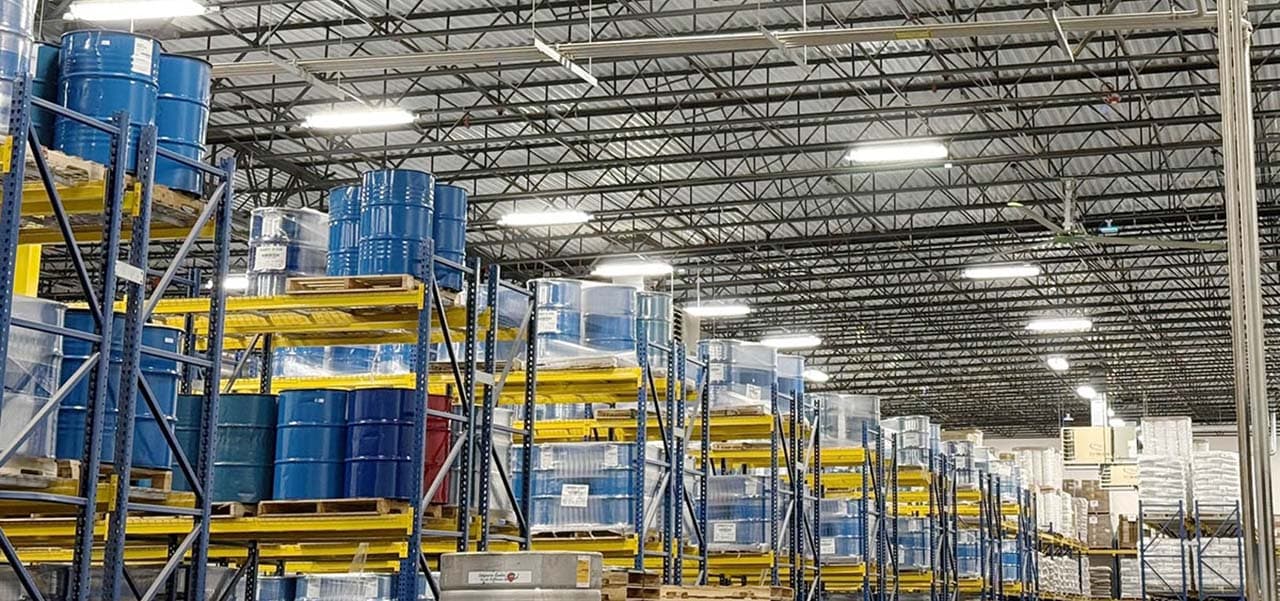
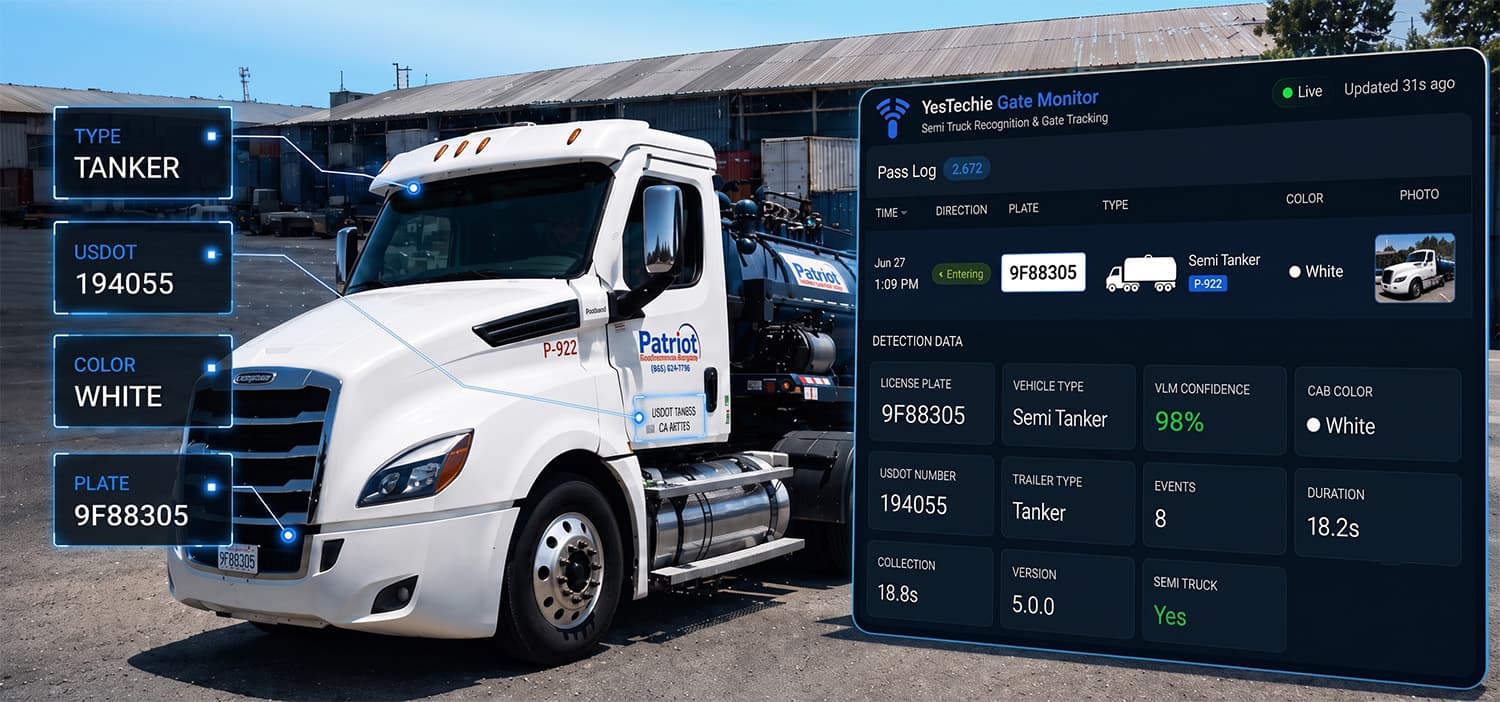
- Logistics Hubs, Yards, and Manufacturing Plants: We secure heavy-duty industrial perimeters, integrating access control logic with automated gate systems, heavy-duty outdoor slide gate operators, License Plate Recognition (LPR) camera arrays, and ruggedized hardware built for harsh environments.
- Multi-Tenant Properties and Corporate Campuses: We bridge the gap between elevator control, perimeter gate management, and internal door partitions, bringing all physical barriers under a single, centralized, license-free database dashboard.

A commercial access system is an evolving security perimeter. YesTechie builds your topology to scale alongside your headcount and operational growth. To ensure your door hardware, controllers, and identity databases remain completely secure, efficient, and aligned with building fire codes long after the initial deployment, we back our physical installations with dedicated technical support. Explore our Managed IT Services to learn more about our proactive maintenance plans, credential management, and automated firmware optimization.
If you are moving into a new commercial facility, upgrading a legacy access panel system, or planning a multi-site security unification, contact YesTechie today to schedule a comprehensive physical layout assessment and technical access audit.
Nationwide B2B Deployment & Enterprise Integration
While our engineering headquarters operates out of Los Angeles, the YesTechie integration team deploys hyperscale access control and physical security infrastructure for commercial enterprises across the United States. We partner exclusively with organizations where perimeter safety, identity management, and physical security are not just basic support functions. They are the critical foundation of daily business operations.
Our physical deployments span massive manufacturing facilities, multi-state logistics hubs, data-intensive media production companies, and distributed corporate enterprises. We do not operate as simple low-voltage installers. We architect converged, license-free access control systems designed to remain absolutely stable under relentless daily loads, ensuring reliable security at all times and seamless scalability alongside your long-term operational growth.
Schedule Your Infrastructure Audit
If you are moving into a new commercial facility, planning to unify fragmented legacy access panels, or require a strict technical audit of an unstable corporate environment, our engineers are ready to architect a high-performance solution tailored exactly to your operational reality.
Contact the YesTechie engineering team today to schedule your comprehensive site assessment and secure your enterprise deployment blueprint.
FAQ
Do we have to pay monthly software licensing fees per door or per user, and what happens if we need technical support?
No. If we deploy a UniFi Access ecosystem for your facility, you purchase the physical hardware controllers and readers once, and you own the operational software permanently. There are no monthly per-door activation fees and no recurring user subscription costs. Since Ubiquiti passes infrastructure control directly to the end-user, they do not bundle factory support contracts. YesTechie bridges this support gap by offering completely flexible coverage models. You can manage the intuitive visual dashboard internally and engage our team strictly for on-demand hourly help, or you can opt for a dedicated monthly SLA plan where our local engineers handle proactive maintenance, lock testing, and immediate hardware replacement from our inventory.
What happens to our security doors and gates if the local network or internet connection drops?
Your facility perimeters remain completely operational and secure. Because we utilize an intelligent local controller architecture, all user access rights, biometric encryption keys, and schedule policies are fully synchronized and processed directly on the individual door hubs. Even during a complete internet outage, your employees can use their credentials normally.
Can you integrate the new access control system with our existing building fire alarm system?
Yes. Life safety is our highest priority. We integrate dedicated, low-voltage fire alarm relays directly into the central access hub architecture. In the event of a fire alarm trigger, power to all fail-safe magnetic locks and electrified emergency doors is instantly dropped, releasing the paths for code-compliant evacuation.
Can we utilize our existing legacy cabling and smart card readers during an upgrade?
Yes. If your facility has an existing structured cable plant, we can deploy modern retrofit hub architectures that utilize your current wiring footprint. Furthermore, the hardware natively interfaces with standard Wiegand and OSDP protocols, allowing us to adopt your existing third-party readers and protect your previous infrastructure investments.
How does the system help our security team visually audit who enters the facility?
We configure unified video logging by permanently binding your door controllers to your local video security cameras on the same dashboard. The moment a credential is swiped, access is denied, or an intercom request is made, the platform instantly attaches a live, timestamped video clip from the nearest camera directly into your administrative audit log.
Can our employees use their smartphones or smartwatches to unlock doors instead of carrying physical key cards?
Yes. We configure mobile access policies that allow your workforce to unlock doors utilizing their smartphones or smartwatches. Modern UniFi readers support secure Bluetooth, NFC, and Apple Wallet integrations. This delivers a frictionless entry experience while maintaining high-tier cryptographic security, entirely eliminating the administrative cost of printing and replacing lost physical key fobs.
How do you secure specific floors in a multi-story corporate building?
We deploy dedicated Elevator Hub infrastructure. This system wires directly into the elevator control cabinet, restricting floor button selections based on the specific scanned user credential. We can program the logic so an employee scanning their badge only gains access to their specific departmental floor, while restricting executive levels and server rooms strictly to authorized personnel.
Can front desk personnel remotely unlock the main gate or lobby doors for delivery drivers and visitors?
Absolutely. We link your exterior entry readers, such as the UniFi G6 Entry or G3 Intercom, directly to your reception desk. When a visitor presses the call button, your security staff receives a live video feed on their desktop monitor, UniFi Talk phone, or mobile application, allowing them to verify the visitor and trigger a remote door override with a single tap.
Can the system execute a facility-wide lockdown during an active security threat?
Yes. Authorized administrators can trigger a global lockdown instantly from the central management dashboard or the mobile application. Once activated, the system immediately overrides standard schedules and disables all standard user credentials, securing every perimeter and interior door. Only highly privileged credentials, such as those assigned to executive security teams or emergency responders, will function to grant entry until the lockdown protocol is officially lifted.
How long will the electronic locks stay powered during a complete facility blackout?
The duration depends on the custom power architecture we engineer for your specific facility. We pair all critical access hubs with a dedicated uninterruptible power supply (UPS) and local battery backup modules. For standard commercial deployments, we calculate battery loads to sustain fail-secure locks and access controllers for several hours, ensuring the building remains physically protected until emergency generators activate or municipal grid power is restored.